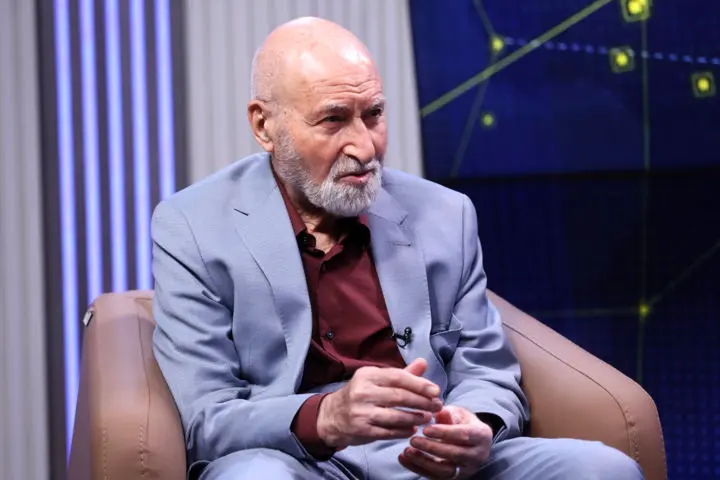
In an interview, Behzad Nabavi, who was the head of Basij Economic Headquarters at the beginning of the war, spoke about the distribution of basic goods with coupons and the opposition of the market faction at that time.
According to Eco Iran, quoted by ISNA; In its fifth issue, which was published on the occasion of the 47th anniversary of the victory of the Islamic Revolution, the quarterly magazine “Gawah” has reviewed one of the least seen managerial experiences of the Islamic Republic, namely the “Economic Mobilization Headquarters” in a file titled “Jang Economic Room”. In this regard, to check the record with Behzad Nabavi The first head of this headquarters has conducted an interview during the eight-year war.
Read the important statements of Behzad Nabavi below;
The idea of creating a mechanism to deal with economic challenges after the revolution was proposed in the interim government and the responsibility was entrusted to the late engineer Ezzatullah Sahabi.
What we later used in the following periods, especially during the war period, were mostly these ideas; For example, the product rationing system or the use of basic commodity coins, these plans were specifically proposed before the start of the imposed war.
When we talk about the conditions under which Shahid Rajaei’s government entered the country’s executive arena, I must say first [که] We were in the middle of a big crisis at that moment. The war was not only a military conflict, but also a comprehensive crisis in the early days, i.e., in the end of September and the beginning of Mehr 1359, which involved the major parts of the country’s economic structures.
The first day of the war coincided with the day when Shahid Rajaei introduced his government to the Imam
The day the war started coincided with the day when Shahid Rajaei introduced his government in the presence of Imam Khomeini. That morning, the news of Iraq’s attack reached our borders; Just like the assassination of Esmail Haniyeh in Tehran, the day after the inauguration ceremony of Dr. Behzikian and the official start of his presidential term. The only difference was that at that time we were faced with a full-scale war, without any preparation for such a crisis.
We – that is, the same group that later cooperated in Shahid Rajaei’s government – were completely inexperienced in those days. Before the revolution, I was the director of sales operations of a private company; My last executive record was the same. After 1351, I was in prison until the days close to the victory of the revolution. After the revolution, I first worked in the committees for a short time and then entered into executive affairs. In general, I must say that none of us had the experience of macroeconomic management with executive.
Shahid Rajaei came to our office and said that they offered me the prime ministership. We both laughed
The office of the Mujahideen Revolution Organization was located on Mujahideen Islam Street. Shahid Rajaei came to our office weekly. I remember that one day after the elections of the first parliament, when Shahid Rajaei came to our office, he told me: “I was offered the position of prime minister.” We both laughed! We said: “Are we like this?” But finally, the atmosphere became such that he accepted the position of prime minister and I became a minister in his cabinet.
After Iraq’s attack, due to Iran’s dependence on wheat imports, the amount of its reserves had become alarming. Khorramshahr – the main window for importing basic commodities such as wheat, barley, sugar and oil – was lost.
In such an environment, we had to think about “war economy”. We also had no experience and we were without experience, without a model, without a recipe. The only thing we had was faith in the nation and God’s help, and that’s where we came up with the idea of ”Economic Mobilization Headquarters”.
The plan that we implemented in Shahid Rajaei’s government – I mean the “Basij Economic Headquarters Plan” – was not the plan that was proposed in the Revolutionary Council.
In fact, we designed and proposed this plan ourselves in the critical conditions of the beginning of the war in the government of Shahid Rajaei, rather than being inspired by an older document or implementing it. At that time, the war had started.
Through the mediation of Mohammad Yazdi, I pledged not to oppose Bani Sadr
During the formation of Shahid Rajaei’s government, Mr. Bani Sadr (then president) opposed some of the figures that were proposed – such as Mr. Mirhossein Mousavi for the Ministry of Foreign Affairs, me or the late Dr. Mohsen Noorbakhsh for the Ministry of Economy. Bani Sadr had also opposed my presence in the cabinet. After many consultations, some of these figures were able to be in the cabinet.
In this context, to resolve Bani Sadr’s concern about my interaction with the president, I gave a letter of commitment. In fact, a kind of “political pledge” in which I wrote: “I will never oppose the legitimate president of the country.” This letter was mediated by the late Sheikh Mohammad Yazdi – who had a good relationship with us at that time and the deceased [محی الدین] Anwari reached Bani Sadr, they had already emphasized to Bani Sadr that Nabi is an advisory minister and will not have a ministry, and finally they got his agreement on the condition that I write a letter of commitment. In this way, I entered Shahid Rajaei’s cabinet as “consulting minister for executive affairs”.
I considered this position like the “French key of the government”; The French wrench is adjusted for each nut; That is, I saw myself as a tool that could help any device, solve any implementation problem, and launch any “nutcracker”. However, in the beginning, I did not have a special duty.
The first responsibility entrusted to me in the early days of the war was the plan of the economic mobilization headquarters. I probably either didn’t understand or accepted this responsibility out of dedication. Since there was no alternative for this responsibility and the critical and urgent conditions demanded it, the prime minister’s proposal was quickly approved by the government board, and the responsibility of the economic mobilization headquarters was officially placed on my shoulders.
When I was arrested in 2008, they put the Basij Economic documents into a sack and took them away
The main goal of the Economic Mobilization Headquarters was to manage the country’s economy in war conditions, with an emphasis on providing for the people’s daily needs. During my arrest in 2008, unfortunately, they took away many documents, minutes of meetings of that period, files and records of the headquarters that I had personally archived in the basement of my house, and unfortunately, they have been lost. My wife said that during the inspection of the house, collect the documents in big sacks [کردند] and they won No one seems to have browsed or archived them page by page since then.
Unlike the Economic Council, which was more focused on long-term and development plans, the Basij headquarters responded to the immediate needs of the people. Our effort in this headquarters was how to provide people with bread in the best and cheapest way, how to distribute fuel, how to import or produce essential goods, while Khorramshahr was occupied and our economic infrastructure was severely damaged.
Contrary to what is sometimes believed, the Ministry of Commerce was not dissolved at that time, but the responsibility of the Basic Commodities Committee was on the Ministry of Commerce.
After the liberation of Khorramshahr, Imam proposed to stop the war/ the commanders and Hashemi Rafsanjani said that we are one step away from Basra
At that time, no one could have predicted that the war would continue for eight years. Even after the liberation of Khorramshahr and the defeat of Hesr Abadan, the Imam himself proposed to stop the war, but in front of the military commanders and the late Hashemi Rafsanjani, arguing that “we are one step away from Basra”, they pressed for the war to continue.
In the end, the Imam (RA) agreed to the continuation of the war. In fact, from 1361 until the end of the war, almost all efforts were focused on the conquest of Basra, but this goal was never achieved. As a result, the country’s facilities were wasted for many years and unfortunately we did not achieve the desired goal.
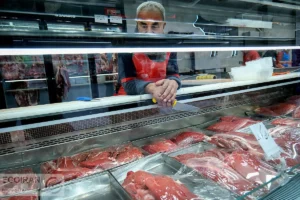
After carefully examining the available sources of domestic capacities and import forecasts, we came to the conclusion that we cannot follow the policy of “anyone can buy whatever they want”. For this reason, we decided to put some key and basic goods, which mainly included sugar, sugar, oil and a few other items, under the quota system. These rations were distributed to the people in the form of “coupons”, what is called “Kalaberg” today.
We knew that breadlessness would not be a serious social and security threat
Of course, the point that was always our priority was that bread, as the most important basic commodity, should never be subject to quotas. Even with all the difficulties and tooth and nail through indirect ways and even by buying wheat from Turkey and importing it by truck through the northern ports of that country, we tried so that people will never face a shortage of bread.
We knew that breadlessness would be not only an economic crisis but also a serious social and security threat.
In the case of printing these coupons, the paper used was the same security paper that was previously used for printing securities. I remember that the central bank under the management of the late Noorbakhsh provided these papers to the headquarters and the coupons were printed with the same security quality. For this reason, cases of coupon fraud were very rare [و] As far as I can remember, there was no obvious case of counterfeit coins. Probably, people also trusted this system and did not try to circumvent it.
The right wing said that Kopenism is the same as communism!
At that time, the decision to implement the coupon system or rationing of basic goods was met with strong opposition. Especially the spectrum that we called “right wing” at that time, they were completely against this method from the top to the bottom. They even said: “Kopenism is the same as communism!” And because of the implementation of this system, they accused us of communist tendencies.
This criticism originated more from political contexts than from the actual economic conditions of the country. in those days, [شعارهایی] Like some slogans today, it was said: “Everything is there, there is no problem!” You just have to leave the market!” And such analyzes were based on the fact that we want to “state” the economy and push the society towards couponing.
But the fact was that almost all the goods that were subject to quotas – such as sugar, sugar and oil – were under the control of the government from the beginning. For example, since the time of Reza Shah, the import of sugar was under the monopoly of the government, and in the case of oil, almost all factories were nationalized. Therefore, the rationing of these goods did not affect the private sector or respectable merchants, but our only goal was to make these limited goods available to all people fairly in the conditions of war and severe restrictions.
The opposition was more political and structural than economic or executive
When Engineer Mousavi formed the new government as the Prime Minister, apparently, agreements were made between some executive institutions and the Islamic Republic Party, based on which, I was removed from both the position of speaking and the head of Basij Economic Headquarters. In my place, Mr. Tavakli was appointed as the speaker and Mr. Gholamreza Aghazadeh was appointed as the chief of staff. I also worked as the minister of heavy industries in the cabinet.
After the changes in Basij Economic Headquarters, we didn’t see accusations such as “Kopenism versus Communism” or strong political attacks from before. It seems that the opposition was more political and structural than economic or executive. Even if we want to be more precise, the root of some of these tensions may go back to the “Mojahedin Organization of the Islamic Revolution” itself and the alignments in this organization; The differences that later led to the formation of some political factions in the country. In any case, when I left the headquarters, the pressure and opposition of that period decreased and a relatively calmer atmosphere prevailed over the activities of the headquarters, although still within the framework of the government’s new decisions.
Critics did not provide a specific and comprehensive alternative plan
Critics did not provide a specific and comprehensive alternative plan. In fact, many of our critics were mainly from the liberal or marketist spectrum of the day, their view was that there was no need for government intervention in the distribution of goods. They believed that “the market will regulate itself.”
But the point they paid less attention to was that we were in a state of war and embargo; That is, the market could not work freely. Imports were limited, domestic production was under severe pressure, and foreign exchange resources were severely reduced. In such an atmosphere, leaving basic goods on the market meant access only for the rich and starvation for the general public.
At that time, the distribution of goods was in the hands of a wide network of business bankers and small sellers across the country. So we at Basij Economic Headquarters had to work with the real structure of the society and not with an ideal system. In the case of basic goods – such as sugar, oil and tea – a system was devised that was entirely based on coupons. We would distribute the product directly to this network but only to the extent of the coupons they would give us back; It means that no one could receive goods more than his quota. This mechanism blocked almost all areas for smuggling or accumulation of goods.
In the case of wheat, flour and bread, the situation was completely different. Smuggling did not exist in this sector because bread was a daily item and could not be stored. People every day [نان] were consumed and no one sought to store bread or flour. So in this area, not only did we not have serious shortages, but even long queues were rare.
Although the system was not perfect, but in that critical situation, it was considered one of the best possible solutions to prevent possible famine and social and economic challenges of the country.