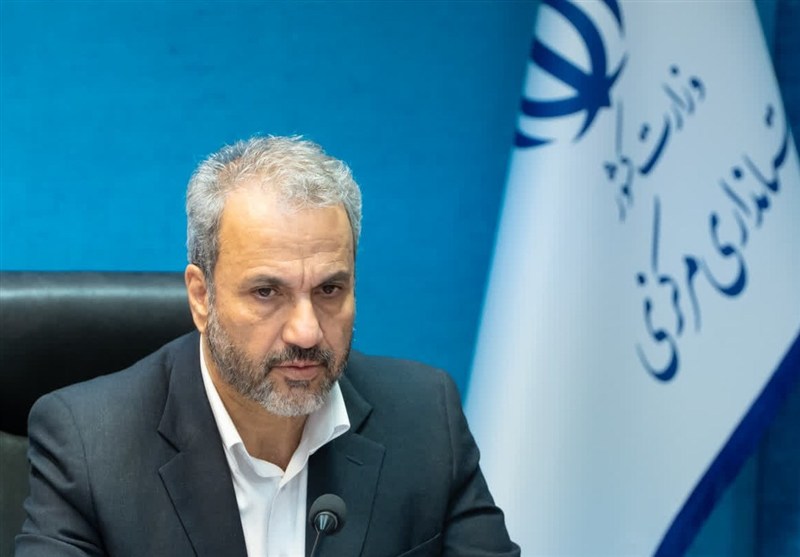
According to the report of Tasnim news agency from Arak, Nader Yarahamdi, advisor to the minister and head of the Foreign Nationals and Immigrants Affairs Center of the Ministry of Interior, said this evening in the Central Province Nationals and Immigrants Commission, referring to the presence of nationals in Iran: in Tehran 2٫۷ Millions of Afghan citizens were present 450 A thousand of them had legal residence; That is, about 2.3 million people were living illegally in the center of the country, although this number has decreased, but the current amount is still less than 8% of the province’s population.
He added: “The situation of the provinces is different and the security, social, political and cultural considerations of each region must be examined separately. Some cities, such as Tabriz, face problems without foreign workers, but accepting families together can create “thousands of problems” and decisions in this field are made with the approvals of the city or province’s supply council, and the Ministry of Interior reviews them with “respect but strictness”.
Affairs related to foreign nationals are done according to the law
Referring to the issuance of work permits, the advisor of the Minister of Interior stated: The guarantee and matters related to the employment of nationals are not carried out through the police force and it is in charge of the General Department of Cooperatives, Labor and Social Welfare, the registrations have been done and There is a joint process between the police force, the Ministry of Foreign Affairs and the Ministry of Labor that only people who are security approved will receive a work permit, and this permit will only be issued to the worker himself, not his family..
Referring to the economic consequences of family adoption, Yar Ahmadi said: If a family of 10 has only one working person, the government must pay a subsidy for 10 people, which costs about two billion tomans, and when we calculate the added value and the distribution of resources, this method is no longer cost-effective and taxes are provided from people’s pockets, and we must at least resist for our own resources.
He continued: The process of amending the law is being pursued and the relevant plan in the parliament is moving fast and it has been reduced from 8 articles to 3 articles.
In many sectors, the role of migrant labor cannot be denied
Advisor to the Minister and Head of the Foreign Nationals and Immigrants Affairs Center of the Ministry of Interior, referring to the immigration situation and the presence of foreign nationals in Iran, stated: Field reports show that some provinces have much better conditions than others, although local perceptions may vary.In many sectors, from agriculture to animal husbandry and poultry, the role of migrant labor in providing food to the country cannot be denied, and we are trying to improve the conditions of the provinces.
Explaining the global migration situation, Yar Ahmadi added: The phenomenon of migration has different dimensions. Today, even an industrialized country like Japan, which was the destination of labor for many years, accepts refugees. In some European countries, the second generation of immigrants have come to power, the way countries deal with immigration depends on their political, social and economic conditions.
Regarding Iran’s conditions in the past four decades, he added: We did not choose to accept immigrants, first we hosted Iraqi refugees due to the imposed war, and at the same time, a wave of Afghan immigrants entered the country. The change of governments in Afghanistan also prevented the formation of a policy in accordance with our interests, the events after 1400 were “totally exceptional” so that When the Taliban came to power, both the opposition to save their lives and some supporters entered Iran due to economic problems; Even people who were fighting alongside the Taliban against America until a short time ago.
The discourse of development considers immigrants as labor force and the primary ingredient of economic growth
Referring to the two main approaches in immigration management, the interior minister’s adviser said: the development discourse considers immigrants as labor and the primary material necessary for economic growth; Human rights discourse emphasizes the necessity of accepting asylum seekers. In Iran, none of these two structures have been formed and mostly a compassionate view has been ruling over public behavior.
He added: Our policy is not complete compliance and companionship with immigrants; Our policy is to legalize the presence of people. We did not have such a crisis before 1400 and most of the concerns were security; Whether these people are related to the American forces present in Afghanistan or not. But since 1400, we have practically entered into a crisis.
Referring to the international immigration standards, Yarah Ahmadi said: Countries usually between 1٫۵ until 3 The percentage of the population accept themselves as immigrants and if the population 90 Millions of Iran is the standard, the acceptance ceiling is approx 2٫۷ until 3 million people; It means that now we have more than one and a half million extra people.
He described countries like the UAE as “exceptions” and added: 75 until 80 The percentage of the population of some Persian Gulf countries are immigrantsBut they are not sanctions. If we were not sanctioned, maybe we could manage and attract a large part of this population better.
Many nationals have entered the country just to find a job
The head of the National Affairs Center said about the state of the provinces: “There are 40,000 to 50,000 people in Kurdistan, and this matter must be managed according to protocols. If the military and law enforcement forces have permission to deal with illegal presence and illegal citizens, they can exercise full control, but many of these people have entered the country just to find work and cannot be dealt with harshly. Of course, between 2,500 and 3,000 people leave the country legally or illegally every day.”
He stated: During the 12-day imposed war, approx 50 A thousand people left the country due to the post-war war 15 We started the project last month, the schedule and information of all people were recorded; But the country got confused and at the same time due to the conditions of the war, the number of arrests increased and we did the management based on the existing capabilities.
Referring to the country’s limited capacity to accept immigrants, Yar Ahmadi added: “If we accept more of these nationals, the existing situation will continue and in some prohibited areas, the same five thousand people that the governors mentioned, all have identity cards, but they don’t actually do anything and only get paid. If such people are added to our centers, the organization will have to act more strictly next year so that the presence of people can be organized only with passports and legal identification, the most important identity, passport; No, they are temporary cards.
Regarding relations with Afghanistan, Yar Ahmadi continued: The national government has come to work by itself, we only accepted it as a political reality and today we have to have economic exchange, the management of this issue should be done by the police and The Ministry of Interior is in a situation where every year 1٫۳ Millions of passports are issued.
Our table has the capacity of three million people, not more than that
Referring to the challenges of work visas, the interior minister’s advisor stated: Employers resist work visas because they intend to escape from insurance and social security requirements, they think that we are used to illegal conditions, but the question is, who will pay for the health care of these people? What about the cost of unemployment of Iranian workers? Education subsidy and subsidy of 1626 dollars per person and if all these are calculated, the use of cheap labor is not economical at all.
He added: We do not intend to fix the work that has taken years overnight; But it was necessary to perform a surgery, our table has the capacity of three million people and if this number reaches six million, even our own children will stop studying.
The head of the National Affairs Center of the Ministry of Interior, referring to education costs, said: 12 The percentage of Afghan population are students; In Iran, this number 16 It is a percentage, that is, a four percent difference, which is to our detriment And education and education has announced that the cost of educating each student is 73 million tomans. Iranians should do their duties, but why should we pay this fee for unauthorized people? We are a member of the 1951 convention and can tax passport holders and refugees.
Yar Ahmadi stated: Conditions must be provided that the immigrant’s entry is through a work visa and have equal conditions with Iranians; At that time, the employer decides freely, in Tehran there were 9,000 people covered, most of whom were under 15 years old. Now Tehran is obliged to replace part of these forces with Iranians; It is doable. The Iranian salary is higher because he wants to make a life, but the immigrant works only to survive.
The population growth of immigrants is worrying
He said about the consequences of the dependence of some jobs on foreign labor: In some areas, the job lines have been removed from being “Iranian”, if Afghans return, Iranians have migrated. If labor is cheap, the calculations shift in favor of the employer. The population growth of immigrants is worrying.
“We are not responsible for making decisions about the population of other countries,” Yarahmadi noted, stressing: “We cannot allow another population to increase within the country.”
Referring to the situation in the capital city, Yar Ahmadi said: There were 2.7 million Afghans in Tehran, of which only 450,000 had legal residence. That is, about 2.3 million people lived illegally in the center of the country. Of course, this number has decreased, but it is still less than 8% of the province’s population.
He evaluated the situation of the provinces differently and added: security, political, social and cultural dimensions are different in each region. For example, Tabriz cannot operate without foreign workers. But if a province wants to organize the presence of immigrants, it must have the approval of the Security Council; We also review it respectfully but rigorously. Accepting immigrant family members can create thousands of other problems.
The interior minister’s advisor stated about the process of issuing work permits: the security of immigrants is not the responsibility of the police force; This responsibility is related to the General Department of Cooperation, Labor and Social Welfare, and the registration has been done and a joint work is going on between the police force, the Ministry of Foreign Affairs and the Ministry of Labor, and only those who meet the appropriate security conditions will receive work permits for the worker, not his family.
approx 1.5 Millions of illegal citizens have left the country
Referring to the state of the nationals of the province, the head of the National Affairs Center of the country stated: According to the reports received, the situation of this province is not critical compared to many provinces of the country, but due to the industrial, agricultural and animal husbandry role of the province, it is natural to expect improvement in the conditions. Countries look at immigrants based on the two discourses of development and human rights, but Iran is in a position where, unlike many countries, it does not have a choice in accepting immigrants and has hosted refugees mainly due to war and insecurity in neighboring countries.
Yar Ahmadi continued: The main policy of the government is not to deport immigrants, our policy is to legalize the presence of foreignersthe country’s ability to attract immigrants is limited and the presence of more than 3 million people is not possible in the current situation, since the beginning of the plans, about 1.5 million illegal citizens have left the country and their daily departure continues.
Referring to the economic pressures caused by the presence of illegal nationals, the head of the Foreign Nationals and Immigrants Affairs Center of the Ministry of Interior said: expenses such as health, education and energy subsidies that are spent on illegal nationals are very heavy. The only cost of educating an Iranian student in public schools is 73 million Tomans. While many citizens do not pay any taxes.
Regarding the request of some employers to use the cheap labor force of nationals, Yar Ahmadi said: Employers think that immigrant labor force is cheap, but the national costs due to their presence are much higher and it creates unfair competition, and if we do not manage today, we may face social tensions.
He pointed out that the future policy is to remove scattered documents and replace passports and work visas for nationals with legal requirements. Only the person himself can apply for a visa by obtaining a passport, and this does not include his family, so as not to impose more tax and subsidy burden on the country.
end of message/711/
منبع:تسنیم